Angus Adventures

Blog

Angus Adventures banner_wordpress_blog.jpg

MEC’s AGM on Weds

April 23rd, 2012 by Colin
Respond

If you’re a MEC member, come out to their AGM this Wednesday. We’re going to be there to talk about our adventures and it’s a great way to find out what your co-op has been doing and tell them what you think. There are also door prizes and appetizers (who can say no to free food).

If you’re not in Vancouver, you can see it online. Go to their website for the details.

And for you Vancouverites, it begins at 6 pm on Weds, April 25th at the Roundhouse (181 Roundhouse Mews).

To wish you a belated Happy Earth Day, we’d like to share this poem by Wendy Cope.

ARBOREAL
We hugged a tree last night
And all of us enjoyed it.
Ecstatic, by moonlight,
We hugged a tree last night.
Trees can’t put up a fight -
That oak could not avoid it.
We hugged it good and tight -
I hope the tree enjoyed it.

Tags: No Comments.

Exciting Stuff!

March 22nd, 2012 by admin
Respond

Spring has sprung, and it seems the circumnavigators are coming out of hibernation. While Colin and I are pretty stationary as we work on our olive book and film, there are plenty of others taking on big challenges.

Sarah Outen from the UK is about head off on what is perhaps the most challenging leg of her human-powered journey around the world; she will attempt to be the first woman to row across the North Pacific Ocean. Sarah will depart from Japan and spend five months or more rowing alone across to North America. So far Sarah has paddled a kayak from England to mainland Europe and pedaled across Eurasia. Now, she will be aiming for Vancouver Island, and plans on cycling across Canada upon reaching our shores. We’re looking forward to welcoming Sarah to Canada when she arrives here in early autumn. You can follow Sarah’s trip at: www.sarahouten.com

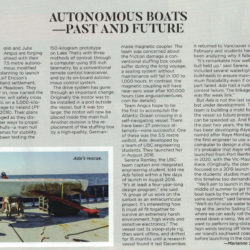
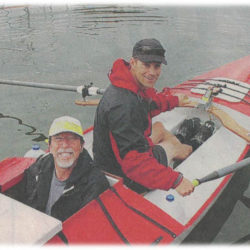
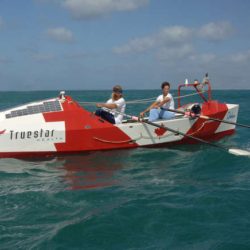
And Adam Kreek, Canadian gold rowing medalist at the Beijing Olympics, along with a team of three others is planning on circumnavigating Vancouver Island in a rowboat. They are using a specialized ocean rowing craft, and will take turns rowing 24 hours/day in shifts of two. They’re hoping to complete the circumnavigation in 14 days, thereby breaking Colin’s current record of 15.5 days. It should be a pretty exciting trip to follow. While their ability to voyage 24 hours a day will offer some advantage, the more variable weather they will encounter in April may create more challenging conditions. You can follow their progress at oarnorthwest.com

The boat Adam Kreek and three other team members will circumnavigate Vancouver Island in

The boat Adam Kreek and three other team members will circumnavigate Vancouver Island in

We were paid a visit a few days ago by Dimitri Keiffer, a French American who is also circling the world by human power. He is currently preparing to resume his epic expedition and will continue from where he left off in Yakutia, Siberia. Dimitri and his expedition partner, Karl Bushby, were the first ever to cross the Bering Strait from east to west by foot. Their crossing involved swimming across open leads the size of large rivers, and frequently breaking through the ice. Nights were particularly terrifying when they would camp on thin ice.

“We slept very lightly,” Dimitri informed us, as he recounted a few nights when the moaning noises coming through the ice transformed to cracking thunder, requiring them to move the tent before the ice completely split beneath them.

Dimitri is now travelling with his girlfriend, and the pair plan on cycling to southern Siberia where they may drop into China before heading west towards the Atlantic. You can follow his blog at www.nexusexpeditions.blogspot.com

The recent weeks haven’t been entirely adventure-less for Colin and me. A few days ago Colin visited northern Alberta to give some safety talks. In Fort Chipewan he had the opportunity to go on a dog sledding/fishing trip.

And life with little Leif is a never ending adventure. He’s now climbing the big slide all on his own, and launching himself fearlessly down the spiraling shoot. Pretty soon we’ll be harnessing that energy (like the huskies in the pics above), and he’ll be providing the horsepower behind our future human-powered journeys.
Have a great spring!

Tags: 1 Comment

February Update - Life at Home

February 14th, 2012 by Colin
Respond

It’s been a while since we’ve last posted a newsletter. Since getting back from our Olive Odyssey expedition at the end of November we’ve been super busy with catching up with all our different projects - working on the book and film, travelling across Canada for various presentations, filling orders for Angus Rowboats and countless other tasks. Julie has been struggling through her chores on crutches and a leg brace for the past couple of months after having her ACL tendon in her knee reconstructed.

It’s also been a tough time for Julie and I as my mother passed away early in the New Year following a long struggle with cancer. She’s been an avid cheerleader for our expeditions and projects and we will miss her dearly.

Leif, on the other hand, oblivious to deadlines and chores has been merrily enjoying life back in Canada. We try to recreate the seafaring days on the Mediterranean by sticking him on a floaty board at the local swimming pool. While it’s not quite the same as charging through waves in gale force winds, it still puts a smile on his face.

For those in the Vancouver area, I will be presenting at the Vancouver Mountain Film Festival this Wednesday, Feb 15th talking about my record-breaking row around Vancouver Island (and a sneak preview of Olive Odyssey). Tickets and info are an the VIMFF site.

Spring is just around the corner, and Julie and I are already planning a number of paddling and hiking adventures around Vancouver Island. Good luck with your own projects, and hopefully we’ll see some of you out there this summer.

Tags: 1 Comment

Olive Odyssey Completed!!

December 2nd, 2011 by Julie
Respond

gethsamen gardensIn the cradle of civilization, where church bells chime, the muezzin’s prayer calls, and Judaism’s most holy site beckons, the story of the olive begins. Here, in what was once part of Phoenicia, now Israel, our expedition to uncover the story of the world’s most influential fruit draws to an end. History is palpable, presenting itself around every corner as mounds of stones, remarkably preserved ruins, pottery shards and even as living ancient olive trees, testament to the work of farmers hundreds or even thousands of years ago. It is here in the lands that are now Syria, Lebanon, Jordan and Israel that methods for producing olive oil were first devised and where the olive tree was first domesticated some 7000 years ago.

For the last four months we have been exploring the old-world olive groves around the Mediterranean, beginning at its western reaches and moving inexorably closer to the tree’s origin in the Middle East. Throughout our journey we spent time with researchers, farmers, chefs, historians, archaeologists, distributors and health experts to reveal the full character of this nuanced fruit. One of the most controversial questions relating to the olive is how did the domestic tree spread throughout the Mediterranean from its origins in the Middle East. The most common theory is that early seafaring Phoenician traders distributed trees in the way of saplings or seeds, or perhaps simply conveyed knowledge of how to domesticate wild trees. Researchers using modern DNA analysis to compare trees have been able to fill in some of the missing pieces, however, the definitive answer is yet to be determined. Regardless of precisely how this process took place, we were excited to finally arrive in the place where it all began.

Dr. Zohar Kerem, an olive researcher from the University of Jerusalem, took us to see some of the oldest olive trees in Israel – living fossils containing a treasure in their ancient DNA. Three hours north of Jerusalem he brought us to a grove of massive trees, their 10+ metre girths twisted and wizened like the faces of old men. These trees, silent witnesses to thousands of years of history, belonged to Nasir Khateeb, a middle-aged Arab farmer with a warm smile and a gift for storytelling, and have been in his family for centuries.

As I examined the largest tree in the grove, a behemoth with the circumference of an airplane, Nasir tapped the trunk and turned to me, “You know the story of Noah?”

“Of course,” I said.

“This is the tree. The dove came here and took a branch. He brought it to Noah to show that the flood was over and there was land to go to.”

If there was any tree that fit the bill, this one would be it. We were on a hill in the Holy Land, at the highest point where olive trees could grow, and Nasir’s olive trees could very well be the oldest in existence. I snipped a few small branches from this fabled tree, so the DNA could later be analyzed.

We carried on to some of the most notable sites in Israel relating to the olive. With the same passion and dedication he applies to his work, Dr. Kerem took us on a whirlwind tour, squeezing a week’s worth of olive sightseeing into a day. We saw ancient olive presses where logs press oil between thick mats and visited a donkey-powered olive mill that is still in use. We were escorted to numerous groves of ancient olive trees, farmers plucking the ripe fruit to be crushed and pressed later in the day.

It seemed everywhere we looked the story of the olive shouted out to us. Ancient Phoenician ports stretching north of Tel Aviv hinted of the beginning of long dangerous sea voyages carrying olives and knowledge to the rest of the word. Jerusalem’s Mount of Olives combines olive trees with some of the most significant events in religious history. And uprooted and burned trees in the West Bank, spoke of the struggle between maintaining family tradition in the face of political difficulties that are an unfortunate part of modern-day Palestine. Production of fair-trade olive oil is a means of helping the ravaged economy, but exporting it from walled-in and heavily controlled West Bank is anything but easy.

We left the Middle East with not only a greater insight into the vital role the olive has played historically and today but also with a greatly expanded collection of ancient olive tree samples for genetic analysis. With the help of Dr. Luciana Baldoni at the Institute of Plant Genetics in Perugia Italy we will uncover much more of the genetic story of these trees, and perhaps shed more light on whether the Phoenicians or other early explorers helped disperse the olive tree throughout the Mediterranean.

We are now home in Canada. Our bags are unpacked, the cat is almost back (she’s fallen in love with our neighbours, who have been caring for her, and their dog,) and we’re getting ready for Christmas. We have just reopened our Angus Adventures store, where you can get our DVDs and books, so if that’s on your Xmas shopping list please visit our online store.

Over the next few months I’ll be completing my book on this journey and Colin will be producing the documentary. Leif is also pretty excited to be home; his toys are once again brand new and exciting, although I don’t think that will last long.

We hope you’ve enjoyed travelling with us on our Olive Odyssey journey and we look forward to sharing the book and film with you.

Tags:   · · · · 1 Comment

Start of Olive Harvest!

November 4th, 2011 by Colin
Respond

Olives ready to harvest

Olives ready to harvest

Things have been pretty busy since our last update, but finally we’ve got a chance to catch up.  We’ve just arrived in Crete, and have a few hours to put our feet up.

We’ve left the boat in Sardinia, and are now travelling by public transport in order to keep to our busy schedule.  Although sailing is the most exciting way to travel, it’s important that we get to visit the most notable locations tied to the history and cultivation of the olive before heading home at the end of Nov.

One such location is the Mani Peninsula in Greece where we have just come from.  We didn’t really know much about Mani apart from the fact that Greece’s largest organic olive oil cooperative, Mani-Bläuel, is situated here.  Upon arriving, we were astonished to find a region of spectacular coastal scenery combined with a rich culture still closely tied to the land.  Unlike most other coastal regions in the Mediterranean we’d visited, Mani remains relatively unscathed by tourist resorts and holiday homes.  Instead, small stone villages with Byzantine and Greek architecture dot the coastline where small coves and beaches offer shelter for the boats.  Between villages, great cliffs plunge into the Mediterranean and above the dry slopes of the Taygetos Mountains reach into blue skies.  The land is so rugged, in fact, that the first road through this region wasn’t built until 1970, one of the reasons Mani has remained the most traditional area in Greece.

It is on these arid slopes that the olive trees thrive, sustaining the villagers for generations.  To this day the lives of the farmers revolve around the cycle of the olive tree, and families are currently gearing up for the start of harvest season.

In past decades, the top-quality oil from this region was bought up solely (for peanuts) by large Italian companies who would ship the oil to Italy and bottle it with Italian labels.  In the 1970s Fritz Bläuel of Austria visited the region and recognized the value of the oil the locals were producing.   Having very strong environmental and health values, Fritz felt the oil could be further improved by using entirely organic means of cultivation.  The first step in creating his organic olive cooperative required convincing the olive farmers to abandon chemicals entirely – not an easy task.  It’s a fascinating story, and now, more than 30 years later Fritz has succeeded in converting over 500 farmers to produce chemical free-olive oil, and the Mani people are proud to have their oil sold around the world proclaimed as Mani instead of “Italian”.

The Mani-Blauel bottling plant is situated on the same slopes that the olive trees grow.  To ensure low impact on the local environment strict measures are taken including producing all the energy required through solar panels; much more costly than carbon offset taxes and testament to the company`s values.

While visiting the Mani-Bläuel operation we were treated frequently to the Mani cuisine.  Composed mainly of local ingredients, plenty of vegetables and lashings of world-class olive oil, we couldn’t help but feel we’d discovered the fountain of youth for food.  If it wasn’t for the heavy smoking, a disregard for seatbelts, and clan battles of decades past, likely every Mani-ite would live beyond 100.

We were sad leaving Mani behind, feeling one could spend a year getting to explore this beautiful forgotten corner of Greece, however, there are more places to see.  We just arrived in Crete this morning and in a couple of days will witness the first pressing of this season’s olive oil at a local mill.  Additionally, there is a conference taking place here on olive biotechnology where world olive experts will share their latest finds on the olives origins, tenacity and more.   We’ll keep you posted…

New pics here

Tags: No Comments.

October Update - Sailing Sardinia

October 14th, 2011 by Colin
Respond

We’re now in the third month of our sailing voyage, and have reached the southern coast of Sardinia. To see our latest photos, click here.

SardiniaOur latitude is 39 degrees north which means we’re still experiencing balmy temperatures (highs about 25 degrees), however, the winds are becoming much more temperamental. As we sailed down Sardinia’s sparsely populated east coast, we read of a 2000 year old description of the region by Pausanias which is just as appropriate today, “An unbroken chain of impassable mountains, and if you sail along the coast you will find no anchorage on this side of the island, while violent but irregular gusts of wind sweep down to the sea from the tops of the mountains.”

While there are no anchorages for this 225 km stretch – mainly just sheer rocky shoreline – there are a handful of marinas with great stone walls to keep out the angry seas; sanctuaries for us when the winds can no longer be euphemistically described as “spirited” and are undeniable gales. While our baby Leif fares well in the rougher seas, we have to hang onto him so he doesn’t hurt himself as the boat is tossed around. When it gets extremely rough, he’s sent to “Alcatraz” – the forward V-berth with a large cushion blocking the door. Since Leif doesn’t like solitary confinement, one of us always accompanies him.

Prior to our journey down the Sardinian coast, we made a quick trip to mainland Italy. Here we met a leading olive researcher, Dr.Luciana Baldoni from the Institute of Plant Genetics in Perugia. Along with her team, Luciana has revealed many of the secrets of the olive through genetic analysis. Questions about the origins of the olive tree and the spread of different cultivars are being answered by their research using the latest advancements in molecular biology. The Institute has been gathering olive tree samples from around the Mediterranean basin and is comparing genetic markers to determine where the trees have come from. We have been gathering samples ourselves from several unique trees and locations which will be analyzed by Luciana’s team.

As well as sharing the fascinating details of their research, the olive scientists showed us the rich olive culture in Tuscany and Umbria including ancient olive trees, an olive mill that was powered by a water wheel only 35 years ago, the various terracing techniques and fantastic Italian cuisine – with abundant use of olive oil.

Our next adventure will be visiting the ancient abandoned Phoenician city of Nora here in southern Sardinia. The Phoenicians were instrumental in spreading olives throughout the Mediterranean, so we are looking forward to visiting this remarkably well-preserved city. The city is so old (2700 years old) that part of it is submerged in the sea due to the fact that southern Sardinia is slowly subsiding. These ancient ruins are now a navigation hazard, and our navigation guidebook warns to be vigilante when anchoring in the area to avoid hitting submerged ruins.

Earlier we promised to give some of the finer details of what is involved in sailing on the Med, so here goes:

Finding a boat: For a trip of just a few weeks, chartering is the way to go, but for anything longer you’re probably better off buying and then selling at the end of the trip (our boat will be for sale soon, by the way). Sailboats in the Mediterranean are pricier than in North America, however, have dropped significantly with the economic downturn. Our 27 foot boat was 7000 Euros, and we spent an additional 1500 on gear.

Permits/Documents Required: Boat registration, insurance (while mandatory, it’s not expensive – basic insurance for a year cost us 54 Euros), certificate of competency (for a Canadian a Small Craft Operator certificate will suffice) and VHF radio operator’s certificate.

How Much Does Cruising Cost: It is possible to cruise on a shoestring by anchoring frequently and purchasing your food from supermarkets and markets. While anchoring is free, good sheltered coves aren’t as frequent as other parts of the world, and often it is necessary to come in to a marina when bad weather threatens. Marina prices vary hugely, and the prices drop significantly out of season. The highest price we paid (for a 27’ boat) was 36 Euros for a night in a shabby marina in Spanish village. The lowest for a night was 10 Euros (off season rate) on the east coast of Sardinia. On average (on and off season rates) we paid about 15 Euros a night and that includes electricity and water. About half the marinas provide complimentary showers, and the others require tokens. Swanky marinas are not necessarily more expensive. In Antibes we stayed in a marina that boasts the most mega yachts in the Med (including billionaires row), and were charged a modest 17 Euros a night.

For those wishing to anchor frequently, often the best anchorages are in the more enchanting areas (such as the Calanques or archipelago clusters). It pays to study the pilot books closely to learn where the best anchorages are. We use the Imray Pilot books which are rather expensive, but worth their weight in gold and include maps, detailed descriptions of all marinas and anchorages, local weather conditions, etc.

Often supermarkets are located close to the marinas making it easy to reprovision. Being in a boat isolates you somewhat from inflated prices associated with different regions. For example, we found the French Riviera (renowned to be expensive) no more pricy than any other region. Marina costs were fair, and supermarket prices constant.

Immigration Formalities: EU residents in an EU registered boat don’t need to clear customs or immigration when they pass between European countries. Foreign boats and non EU residents are required to clear with customs and immigration upon arrival in each new country.

How Difficult is It?: Sailing in Europe is like driving in Europe – tight maneovering, quick reflexes required, and a little less open space than back home. Still, any competent sailor shouldn’t have troubles once they get used to the slight differences. Perhaps the most important skill to brush up on is tight manoeuvring by engine. Marinas in the Med are very different from the big open watercades we’re used to at home, and troubles manoevering will, at the very least, be embarrassing.

Generally marinas use a system where boats flank one another, where only the bow or stern is attached to the dock, the other end of the boat is attached to a chain running along the seabed. It sounds complicated, but just spend time inspecting how the other boats are doing it before you attempt to berth your own boat.

In the eastern med, a common berthing technique is to drop your anchor, and reverse up to a pier. Ropes are then affixed to the pier, and the anchor rode pulled tight to hold the boat just off the pier. It sounds straightforward, but can be rather difficult when trying to drop the anchor, steer a boat that doesn’t steer in reverse, and squeeze into a miniscule gap between two shiny yachts with a combined value over ten million. Again, spend some time practicing in advance.

Weather: Temperatures in the late spring, summer, and fall are pleasant (sometimes unbearably hot), but conditions on the sea can be surprisingly nasty. Winds can change quickly from dead calm to gale force, and large powerful waves created on the shallow seas. The good news is we’ve found the weather forecasting to be surprisingly accurate. It’s best if you have internet access so you can compare a range of forecasts.

Tags: 4 Comments

Exploring olive history in Italy

October 5th, 2011 by Julie
Respond

We’re currently in Perugia, Italy, an ancient city rich with Etruscan, Roman and Gothic architecture. It is an enrapturing city of narrow streets, capacious churches, and stunning architecture encircled by a towering wall that protected its citizens more than 2,000 years ago. Here are a few photos from the last two days in Perugia and the Umbrian region.

Italian olive treeHere we visited olive expert Dr. Luciana Baldoni and her lab, who are using genetic techniques to discover how the olive tree spread throughout the Mediterranean. It’s fascinating to apply this modern technology to these ancient tree and see how it can add to the story. Olive oil has been used in Italy for 3,000 years or more, imported from further east and produced here as well. But who first grew those olive trees and where did they come from? It’s a convoluted story filled with myth and fact; contradictions are everywhere. But now more than ever we are starting to understand this story and it’s thanks to the work of researchers like those here in Perugia.

We are a part of exploring that story. All throughout this journey we are collecting samples of ancient olive trees and Dr. Baldoni’s lab will analyse those to see what their DNA can tell us about their origin. Will we learn whether olive trees growing at ancient Phoenician sites were brought there by those mariners 3,000 years ago or whether it was the local inhabitants who took wild olive trees and cultivated them.

From here we’ll continue down the eastern coast of Sardinia and explore the ancient Phoenician ruins that dot the coastline and especially the stunning remnants at Nora.

Tags:   · · · · · · 5 Comments

Birthday in Cannes

September 17th, 2011 by admin
Respond

Cannes, France, seems a` suitable place for a baby to celebrate his first birthday. It’s a hub of activity; people, boats, dogs, markets, music – everything a high-energy baby enjoys, so we were pleased to sail into Cannes harbour today to celebrate Leif’s 366th day of life.
We’re celebrating Leif’s birthday with some of his favourite treats. Though a very fussy eater, his favourite foods are not what you expect – licorice, smoked mackerel and olives. And, since he loves music, we bought him a tambourine for a present.
The new head gasket for the engine is holding strong. The job seemed to get more and more complex as we disassembled the engine with the most basic of tools. By the end, it seemed the engine might never run again. Miraculously, the diesel rumbled to life with a turn of the key, and it’s been running smoothly ever since.
From Cassis, the coast of Provence has been a treat for sailing. We’ve been able to anchor in small protected bays – sometimes near larger cities like St. Tropez, other times in marine parks with just a few boats for company. One such spot was Ile de Port Cros – a storied island about ten km from the coast. It was first occupied by the Greeks, followed by the Romans. Now it’s a park, and Julie and I strolled through pine forests exploring the ancient ruins. Amongst the ruins we discovered a plantation of old twisted olive trees. We collected a few samples so we can later learn their origins through genetic testing.
We’re near the Italian border, and will be enjoying Italy in a few days.

Our latest photos can be seen here.

Many varieties of olives can be found in local markets

Many varieties of olives can be found in local markets

Tags: 1 Comment

Out of Spain and into France

September 3rd, 2011 by Colin
Respond

We’ve made to France! Our maiden voyage sailing 400 km from Barcelona to the Marseille region went well. Our 28’ sailboat, Isis, handled the open sea with aplomb, and the sailing rig is a dream - much more efficient than the boat I sailed across the Pacific 20 years ago. Our boat has an electric autopilot and a roller furling headsail, conveniences that make sailing with a baby possible.

Anchored in the French CalanquesSo what’s it like sailing with an eleven-month old baby? Not easy. While Leif took to the seas with enthusiasm, he’s a high-maintenance baby at the best of times, meaning a lot of precious time is spent tending his needs. The most challenging aspect is night sailing when someone needs to be on watch constantly. This can be exhausting at the best of times, but when you throw in an energetic baby that enjoys feeding five times through the night, rises at six am, and then crawls around like the Energizer Bunny on steroids, things can be a little wearisome. The good news is Leif doesn’t get seasick, and seems more stimulated in the boat than he does at home.

Traffic on the Mediterranean is quieter than expected, and we’ve found it relatively easy navigating our way along the coast. There are few offshore hazards such as reefs, and the greater danger is the quickly changing weather. We are travelling on a large body of water with shallow depths, so storms rapidly build steep powerful seas.

From Barcelona, we spent a couple of days coastal hopping, staying in marinas or anchoring out. The shoreline alternated between rocky convoluted stretches and expansive beaches. The beach areas were generally backed with sprawling condos, resorts and highways while the rocky headlands were less habituated and more interesting to regard.

Generally we anchored, as it’s free, and it also allows us to stay in the more wild and remote areas. On our last night in Spain, we anchored in a wildlife preserve and were pleased to see our first pod of dolphins. Later, swimming with mask and snorkel, we were treated to a colourful array of fish swimming amongst the rocks beneath our boat.

We planned on sailing straight across the Golfe de Lion, a stretch of water that has the greatest percentage of gale-force winds on the Mediterranean. A major storm was predicted to cross our path, so we opted to wait a night in the Spanish fishing/tourist village of Palamos while the Tramontane winds pumped along the Pyrenees Mountains and out into the gulf.

It took us 26 hours to sail across the gulf from Spain into France. Our destination was the Calanques, a wild stretch of shoreline which possesses one of the most stunning geographical features in the western Mediterranean. High limestone cliffs eroded by ancient streams are cut by steep narrow fjords. The narrow inlets are lined with steep spires, arches and cliffs hundreds of feet high. We’d heard vivid descriptions of the Calanques, but it wasn’t until we arrived in our small boat, that we truly were able to appreciate their splendour.

The numerous caves in the Calanques were used by ancient man, and cave paintings in the area have been dated to 27000 years BC. For us, the Calanques were of great interest because wild olive trees live in this area. Due to the rugged terrain, the area has never been used for agriculture which means it is less likely the wild olive trees have bred with domestic trees. This means the olive trees in the Calanques will be good stock for our genetic sampling of the original native olive trees in Europe. Sure enough, half an hour after scrambling up steep limestone cliffs, we found an olive tree flourishing in the hot dry environment. The modest sized tree – about 10’ high – possessed a thin offering of pea-sized olives throughout its branches. We sampled the extremely bitter fruit, and Julie tucked a branch into a ziplock bag for later DNA analysis. Twenty feet above the olive tree, we came across a large cave, perfectly sized for a large caveman family. We imagined the early Cro-Magnon French, relaxing at the entrance of their cave eating fresh ibex and olives (there’s actually no evidence to support or dispute the idea of cavemen eating olives).

The severe Tramontane winds (blowing at 40 knots) had stirred up the waters of the Mediterranean, and swimming in the turquoise waters of the Calanques was quite a shock after our experience with the warm waters near Barcelona. Park officials told us the temperature had dropped from 24 degrees to 18 degrees overnight with the passage of the storm.

After spending a few days in the Calanques, we sailed into the charming town of Cassis where we are currently. We could use a lot of superlatives to describe Cassis, but instead you can see it, along with the rest of our sailing trip so far in the photo gallery we’ve just posted…

Next, we’ll be sailing through the French Riviera and on through to Italy. Stay tuned for an upcoming update where we’ll give the details about sailing on the Med – everything from boat costs, marinas, anchoring, etc. It’s probably cheaper than you might expect…

Tags: 8 Comments

Sailing

August 24th, 2011 by Julie
Respond

Our paperwork is finally done, our boat is packed and the winds are in our favour.  Within the hour, we’re going to hoist are sails and head towards France.

Our time in Spain and Barcelona in particular has been filled with olive infused foods, hot days and preparations.  The sky is cloudless and the temperatures will once again reach 36 degrees ,  there are no winds yet but in about an hour they will start.  The weather is predicted to be good for the next day and a half and then a blow from the North is coming and we’ll need to find a safe spot to wait it out.

Leif is adjusting well to life on the boat.  His room is the V berth, which is the most spacious area at the front of the boat.  Both he and Colin were sick for the last while. Leif had a form of measles called Roseola and then both him and Colin caught a flu, but now the boys have almost recovered.

Well it’s now time to go.

Fair winds!

Tags: 1 Comment